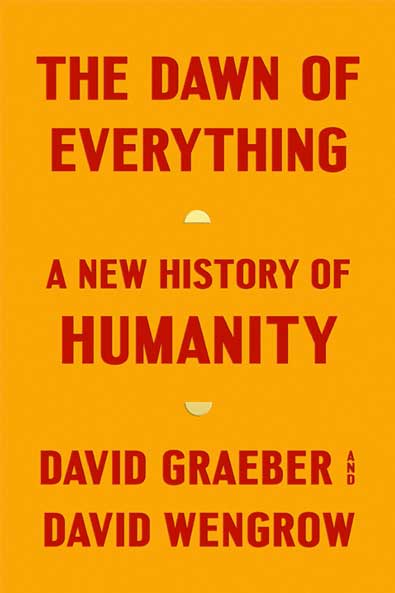

For generations, our remote ancestors have been cast as primitive and childlike―either free and equal innocents, or thuggish and warlike. Civilization, we are told, could be achieved only by sacrificing those original freedoms or, alternatively, by taming our baser instincts. David Graeber and David Wengrow show how such theories first emerged in the eighteenth century as a conservative reaction to powerful critiques of European society posed by Indigenous observers and intellectuals. Revisiting this encounter has startling implications for how we make sense of human history today, including the origins of farming, property, cities, democracy, slavery, and civilization itself.
Drawing on pathbreaking research in archaeology and anthropology, the authors show how history becomes a far more interesting place once we learn to throw off our conceptual shackles and perceive what’s really there. If humans did not spend 95 percent of their evolutionary past in tiny bands of hunter-gatherers, what were they doing all that time? If agriculture, and cities, did not mean a plunge into hierarchy and domination, then what kinds of social and economic organization did they lead to? The answers are often unexpected, and suggest that the course of human history may be less set in stone, and more full of playful, hopeful possibilities, than we tend to assume.
The Dawn of Everything fundamentally transforms our understanding of the human past and offers a path toward imagining new forms of freedom, new ways of organizing society. This is a monumental book of formidable intellectual range, animated by curiosity, moral vision, and a faith in the power of direct action.
Related Video
Related Resources
Capitialism & Philanthropy
A look at the darker side of MrBeast’s philanthropy and the wider philanthrocapitalist model it's a part of.
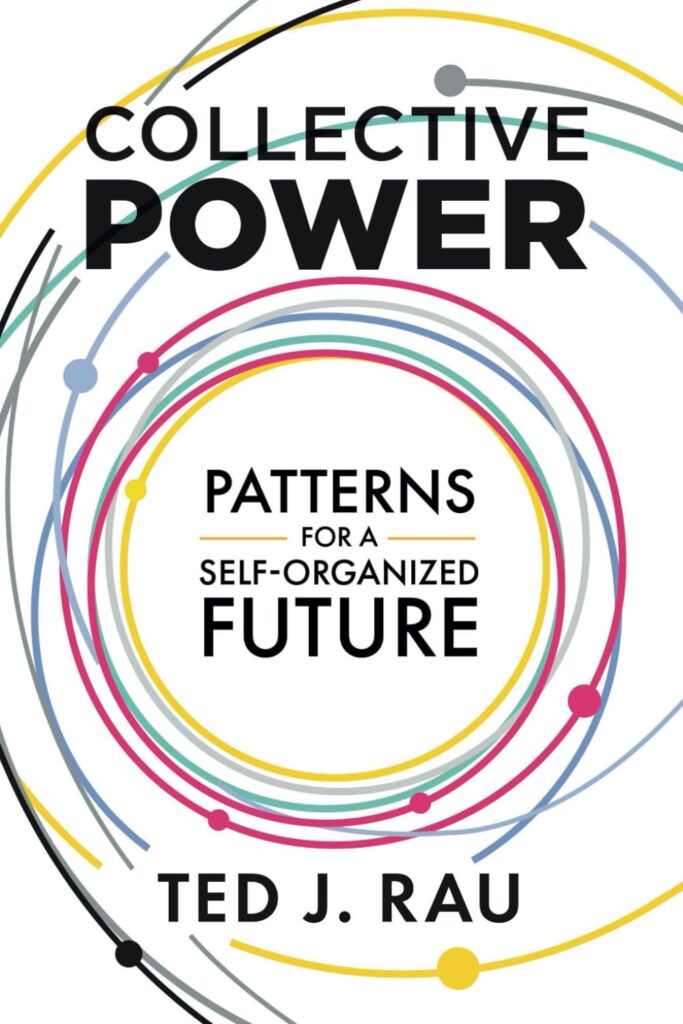
Prosocial
Using Evolutionary Science to Build Productive, Equitable and Collaborative Groups
Be More Pirate
Pirates didn’t just break the rules, they rewrote them. They didn’t just reject society, they reinvented it. Pirates didn’t just challenge the status-quo, they changed every f*cking thing. Pirates faced a self-interested establishment, a broken system, industrial scale disruption, and an uncertain future. Sound familiar?
“I’d rather be a pirate than join the navy.”—Steve Jobs
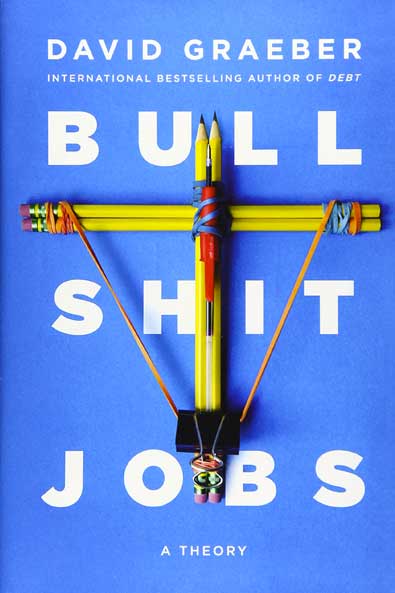
Bullshit Jobs: A Theory
From best-selling writer David Graeber, a powerful argument against the rise of meaningless, unfulfilling jobs and their consequences.

The Utopia of Rules
On Technology, Stupidity and the Secret Joys of Bureaucracy